|
 |
Religious and Spiritual
Role
The Sacred Military Constantinian Order of Saint George, which is not a Order of Knighthood or Merit of the Holy See, is one of the most ancient Roman Catholic dynastic Orders of Knighthood, which exists in the world today. The Royal Order of Francis I is not an exclusively Roman Catholic order and has among its members other Christian denominations, as well as those professing the Muslim and Jewish faiths.
Papal
appointments of Cardinal Protectors of the Order.
Over
many centuries the Constantinian Order has played an important role in
defending the Roman Catholic faith. Successive Popes since the 12th century
have issued Papal Bulls concerning the Order, its religious activities
and function. The Pope and the Church has also expressed their gratitude
and benevolence in many other ways during this long and historic relationship
between the Order and the See of Saint Peter.
Significantly, the Papal Bull ‘Militantis Ecclesiae’ of Pope
Clement XI(left) in 1718, laid down new statutes of the Order
and made provision for the appointment of a Cardinal Protector (the official
representative of the Pope in the Order), as well as a Grand Prior. This
Bull also reserved to the Apostolic See
the right to involve itself in the Order’s affairs and its spiritual
development and this has been confirmed and unchanged by almost every
successive Pontiff.
Numerous Popes have been senior members of the Constantinian Order or
have seen fit to appoint official papal representatives to the Order in
the form of Cardinal Protectors. Cardinal de‘ Massimi(right) became the first Cardinal Protector by order of Pope Clement X in 1672.
In 1687 Pope Innocent XI appointed Cardinal Gaspero Cavelerio to the post,
before appointing Cardinal Albani – the future Pope Clement XI in
1690. Numerous other appointments to these posts were made in the years
that followed.
Spiritual Role of the
Order maintained despite loss of Kingdom.
Since
the annexation of the Kingdom of the Two Sicilies to the newly created
Kingdom of Italy in 1861, various attempts by the reigning House of Savoy
of Italy to annex the Order were made, but rejected by Pope Pius IX (1846-1878).
Following the death of Francis II, last King of the Two Sicilies, and
the succession of his half brother, Prince Alfonso, Count of Caserta,
Duke of Castro, and Grand Master from 1892 –1934, the Order continued
to enjoy excellent relations with the Papacy. This was particularly so
with Pope Pius X(left) and Pope Benedict XV(below). By Papal Brief of
7 March 1910 Pope Pius X revived the institution of a Cardinal Protector
of the
Constantinian Order and appointed Cardinal Domenico Ferrata to the post.
On his death in 1913, the Pope appointed Cardinal Francesco di Paola Cassetta
to replace him. The Secretary of State of the Holy See, Cardinal Rafael
Meery del Val, became a Bailiff of the Order in 1912.
Pope Benedict XV (1914-1922) was also favourably disposed towards the
Constantinian Order and its Roman Catholic tradition and spiritual activity.
In 1916 he restored the Church of Sant’Antonio in Naples to the
Constantinian Knights, and when Cardinal Cassetta died in 1919 appointed
as Cardinal Protector, Cardinal Vittorio Amadeo Ranuzzi de Bianhi to replace
him. Pope Benedict’s Secretary of State was also appointed as a
Bailiff of the Order at this time.
Pope Benedict also approved the 1919 revision of the Order’s statutes and
instructed the Sacred Congregation of Rites to give formal approval, in
a Decree of 9 July 1919, to an official calendar of feast days, together
with special prayers and Lessons for the Office. The Pope also sanctioned
the building of a chapel dedicated to the Constantinian Order in the new
basilica of Santa Croce al Flaminio in Rome, which was paid for by the
knights.
During the same pontificate the Pope’s new Secretary of State, Cardinal
Pietro Gasparri, was invested as a Bailiff on the Constantinian Order,
along with numerous other Cardinals including the Archbishops of Baltimore
and Boston.
The Order’s
spiritual role under Mussolini’s pressure.
In
1922 Pope Pius XI(left) began his pontificate and priority was
given above all else to the delicate negotiations between Italy and the
Holy See concerning the establishment of what became the sovereign Vatican
City State. (Since the forced annexation of the Papal States in 1870 to
the Kingdom of Italy, the Pope was a virtual prisoner within the walls
of the Vatican).
Further attempts were made by the then Italian Prime Minister, Benito
Mussolini (below) to annex the Constantinian Order and this forced a change in
the formal relationship of the Constantinian Order and the Vatican City
State.
Under pressure and protest from Mussolini, the Papal appointment of a
Cardinal Protector was temporarily suspended following the death in 1924
of Cardinal Ranuzzi de Bianchi. The Constantinian Order's standing in
canon law remained unchanged, as was the Order’s appellation ‘Sacred’
– a status that was only granted to Orders under the direct or protection
of the Apostolic See.
The revised spiritual role of the Order.
Yet
the failure of the Pope to appoint a Cardinal Protector did not in anyway
affect the religious role of the Order, and following the signing of the
1929 Concordat which created the Vatican City State, many Cardinals, including
the new Vatican Secretary of State, Cardinal Eugenio Pacelli, became a
Bailiff of the Constantinian Order.
Pope Pius XII (left) who pontificate lasted from 1939 to 1958 was a Bailiff of the Constantinian Order. Numerous other Cardinals, Archbishops and clergy were invested, and participated in the religious life of the Order under the Grand Masters of Prince Ferdinando Pio, Duke of Castro, from 1934-1960 and Prince Ranieri, Duke of Castro, from 1960-1973.
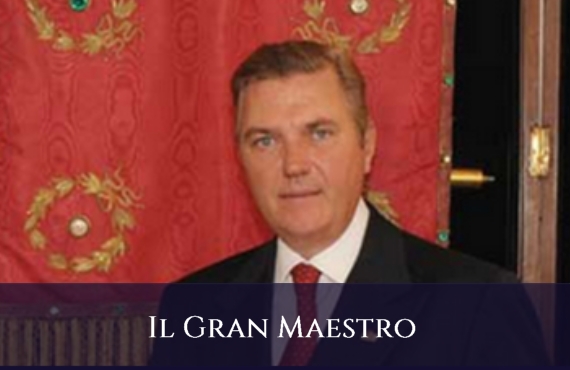
The relationship has strengthened under the current Head of the Royal House of Bourbon Two Sicilies and Grand Master of the Constantinian Order,
HRH Prince Ferdinando, Duke of Castro(right). Cardinal Vincenzo
Fagiolo held the post of Grand Prior, and in 2000 he was succeeded by
His late Eminence Mario Francesco, Cardinal Pompedda, Prefect of the Supreme
Tribunal of the Apostolic Segnatura and President of the Court of Cassation
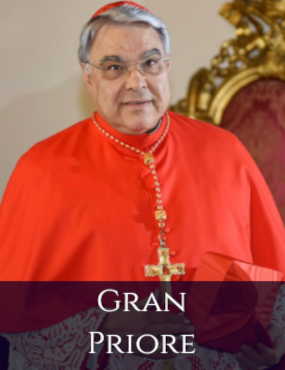
of the Vatican City State. Cardinal Pompedda remains Grand Prior to this
day.
Pope John Paul II appoints Ecclesiastical Counsellor to the Constantinian Order under the grandmastership of The Duke of Castro.
In November 2003 His Holiness Pope John Paul II (left) formally appointed His late Eminence Mario Francesco, Cardinal Pompedda, as his Ecclesiastical Counsellor to the Constantinian Order under the grandmastership of HRH Prince Ferdinando of Bourbon Two Sicilies, Duke of Castro. This was a major act of formal recognition between the Holy Father and the Order.
In confirming the appointment, His Eminence Angelo, Cardinal Sodano, Secretary of State of the Vatican City State (below) stated in a letter to Cardinal Pompedda, "On numerous occasions, Your Eminence has spoken to His Holiness Pope John Paul II of the need to provide greater spiritual assistance to those members of the Constantinian Order of Saint George for whom You have agreed to act as Grand Prior, by designation of Prince Don Ferdinando Maria of Bourbon Two Sicilies.
"I have now been requested to inform You that the Holy Father, out of pastoral solicitude, has appointed Your Eminence, for a term of five years, as Ecclesiastical Counsellor of the Deputation of the Constantinian Order that recognises Prince Don Ferdinando Maria of Bourbon Two Sicilies as its Grand Master.
"For my part, I shall gladly beseech the Lord to bestow abundant blessings upon Your endeavour to promote an ever more intense Christian culture among those who will benefit by Your ministry, under the banner of the Constantinian Knights’ ancient tradition of fidelity to the Church.
"A copy of this letter has been sent by me, on this day, to Prince Don Ferdinando Maria of Bourbon Two Sicilies to inform him of this and to extend most cordial greetings to him. I take this opportunity to assure You of my highest regard. Yours devotedly in Christ + A. Card. Sodano, Secretary of State".
To download the letter of appointment, which is in Italian, click here.
For the English translation click here.
Cardinal Pompedda continues as Ecclesiastical Counsellor to the Constantinian under the new pontificate of His Holiness Pope Benedict XVI.
His late Eminence Mario Francesco, Cardinal Pompedda, following the death of His late Holiness Pope John Paul II automatically continued as Ecclesiastical Counsellor to the Constantinian Order under the new pontificate of His Holiness Pope Benedict XVI until His late Eminence’s own death in October 2006. The Order will announce in 2007 the replacement of Cardinal Pompedda as Grand Prior.
The Constantinian Order and the Sacred College of Cardinals.
Today many members of the Sacred College of Cardinals are senior members of the Constantinian Order and play an important spiritual role on both a local as well as international level within the Order. Several Cardinals fulfill the role of Prior to a local or national delegation of the Order.
Among those currently active within the life of the Constantinian Order are: His Eminence Fiorenzo, Cardinal Angelini, President Emeritus of the Pontifical Council for the Pastoral Care of Health Care Workers, His Eminence William Wakefield, Cardinal Baum, Major Penitentiary Emeritus of the Apostolic Penitentiary, His Eminence Giacomo, Cardinal Biffi, Archbishop of Bologna, His Eminence Josip, Cardinal Bozanic, Archbishop of Zagreb, His Eminence Desmond, Cardinal Connell, Archbishop Emeritus of Dublin, His Eminence Godfried, Cardinal Danneels, Archbishop of Mechelen-Brussels, His Eminence Edward Michael, Cardinal Egan, Archbishop of New York, His Eminence Roger, Cardinal Etchegaray, President Emeritus of the Pontifical Council for Justice and Peace, His Eminence Édouard, Cardinal Gagnon, President Emeritus of the Pontifical Council for the Family, His Eminence Bernardin, Cardinal Gantin, Prefect Emeritus of the Congregation for Bishops, His Eminence Francis Eugene, Cardinal George, Archbishop of Chicago, His Eminence Michele, Cardinal Giordano, Archbishop of Naples, His Eminence Salvatore, Cardinal De Giorgi, Archbishop of Palermo, His Eminence William Henry, Cardinal Keeler, Archbishop of Baltimore, His Eminence Renato Raffaele, Cardinal Martino, President of the Pontifical Council for Justice and Peace, His Eminence José, Cardinal Saraiva Martins, Prefect of the Congregation for the Causes of Saints, His Eminence Paul Augustin, Cardinal Mayer, Prefect Emeritus of the Congregation for Divine Worship and the Discipline of the Sacraments, His Eminence Theodore, Cardinal McCarrick, Archbishop Emeritus of Washington, His Eminence Dino, Cardinal Monduzzi, Prefect Emeritus of the Papal Household, His Eminence Cormac, Cardinal Murphy-O'Connor, Archbishop of Westminster, His Eminence Virgilio, Cardinal Noé, Archpriest Emeritus of the Vatican Basilica, His Eminence Antonio María, Cardinal Javierre Ortas, Prefect Emeritus of the Congregation for Divine Worship and the Discipline of the Sacraments, His Eminence Salvatore, Cardinal Pappalardo, Archbishop Emeritus of Palermo, His Eminence Luigi, Cardinal Poggi, Archivist and Librarian Emeritus of the Holy Roman Church, His Eminence Angelo, Cardinal Scola, Patriarch of Venice, His Eminence Crescenzio, Cardinal Sepe, Prefect of the Congregation for the Evangelization of Peoples, His Eminence James Francis, Cardinal Stafford, President of the Pontifical Council for the Laity, His Eminence Alfons Maria, Cardinal Stickler, Archivist and Librarian Emeritus of the Holy Roman Church, His Eminence Dionigi, Cardinal Tettamanzi, Archbishop of Milan and His Eminence Alfonso, Cardinal López Trujillo, President of the Pontifical Council for the Family.
The Following members were also members of the Order until their recent demise. His late Eminence Mario Francesco, Cardinal Pompedda, Prefect of the Apostolic Segnatura and President of the Court of Cassation of the Vatican City State, Grand Prior and Ecclesiastical Counsellor to the Sacred Military Constantinian Order of St George, His Eminence Giuseppe, Cardinal Caprio, President Emeritus of the Prefecture for the Economic Affairs of the Holy See and Cardinal Grand Master Emeritus of the Equestrian Order of the Holy Sepulchre of Jerusalem, His Eminence Silvio, Cardinal Oddi, His Eminence Pietro, Cardinal Palazzini, His Eminence Lucas, Cardinal Moriera Neves, His Eminence Maurice, Cardinal Otunga, His Eminence Vincenzo, Cardinal Fagiolo, and His Eminence Francesco, Cardinal Colasuonno.
The Constantinian Order and Diocesan and Titular Archbishops.
HE The Most Rev Mgr Ottorino Pietro Alberti, Archbishop Emeritus of Cagliari, HE The Most Rev Mgr Angelo Babnasco, Archbishop for the Military for Italy, HE The Most Rev Mgr Luigi Barbarito, GCVO, Titular Archbishop of Fiorentino and Apostolic Nuncio Emeritus to Great Britain, HE The Most Rev Mgr Bernard Barsi, Archbishop of Monaco, HE The Most Rev Mgr Gaetano Bonicelli, Archbishop Emeritus of Siena-Colle di Val d'Elsa-Montalcino, HE The Most Rev Mgr Antonio Cantisani, Archbishop of Catanzaro and Squillace, HE The Most Rev Mgr Carmelo Cassati, Archbishop Emeritus of Trani-Barletta-Bisceglie, HE The Most Rev Mgr Andrea Cordero Lanza di Montezemol, Titular Archbishop of Tuscany, The Most Rev Mgr Maurice Couve de Murville, Archbishop Emeritus of Birmingham, HE The Most Rev Mgr Francesco Cuccarese, Archbishop of Pescara Penne, HE The Most Rev Mgr Timothy Dolan, Archbishop of Milwaukee, HE The Most Rev Mgr Riccardo Fontana, Archbishop of Spoleto-Norcia, HE The Most Rev Mgr Alessandro Maria Gottardi, Archbishop Emeritus of Trento, HE The Most Rev Mgr William Lori, Archbishop of Bridgeport, HE The Most Rev Mgr Giuseppe Mani, Archbishop of Cagliari, HE The Most Rev Mgr Giovanni Marra, Archbishop of Messina, HE The Most Rev Mgr Edoardo Menichelli, Archbishop of Ancona-Osimo, HE The Most Rev Mgr John Michael Miller, Titular Archbishop of Vertara, HE The Most Rev Mgr Gastone Mojaiski Perrelli, Archbishop Emeritus of Sant' Angelo of Lombardi-Conza-Nusc, HE The Most Rev Mgr Giuseppe Molinari, Archbishop of L'Aquila, HE The Most Rev Mgr Vittorio Luigi Mondello, Archbishop of Reggio Calabria-Bova, HE The Most Rev Mgr Gabriel Montalvo, Titular Archbishop of Celene, HE The Most Rev Mgr Cataldo Naro, Archbishop of Monreale, His Grace The Most Rev Mgr Vincent Nichols, Archbishop of Birmingham, HE The Most Rev Mgr Marian Oles, Titular Archbishop of Raziari, HE The Most Rev Mgr Giovanni Battista Pichierri, Archbishop of Trani, HE The Most Rev Mgr Vito Roberti, Archbishop Emeritus of Caserta, HE The Most Rev Mgr Bruno Schettino, Archbishop of Capua, HE The Most Rev Mgr Francesco Pio Tamburrino, Archbishop of Foggia-Bovino, HE The Most Rev Mgr Antonio Maria Travia, Archbishop of Termini Imerese and HE The Most Rev Mgr Alberto Tricarico, Archbishop of Sistroniana.
Religious
requirements of membership.
Today the Constantinian Order and Apostolic See maintain
an excellent spiritual relationship together. Its worldwide membership
from Cardinals to lay members fulfils the religious requirements of membership.
It is the primary duty of the knights and dames of the Sacred Military
Constantinian Order to live as true, exemplary Christians, and to dedicate
themselves to any activity or endeavour that fosters the growth of religious
principles among mankind, co-operating in every manner with the practice
of the Christian way of life.
The Order, in keeping with the times, today emphasises major contributions
to the two great social works, namely hospital assistance and charitable
relief of the poor. Knights and dames of the Sacred Military Constantinian
Order of Saint George must be practising Roman Catholics and in good standing
with the Church.
They must also fulfil two basic principles as part of their membership
of the worldwide confraternity, which is clearly illustrated in the statutes
of the Constantinian Order:
- Work for the glorification
of the Christian Cross, the preaching of the Roman Catholic Faith and
the defence of the Roman Catholic Church.
- Promote the spiritual and physical
welfare of the sick and disabled, the poor, the homeless and the illiterate;
to aid and protect them and contribute to their material and moral support;
to establish institutions of Christian charity to attend to their needs;
to co-operate with other agencies or institutions which engage in like
work; and, generally, to do any and all things and engage in any and
all activities which, in the judgment of the Grand Master and the Council
of the Delegation may be necessary or proper to accomplish the aforesaid
purposes and objectives.
Feast Days and Inter-church
and interfaith dialogue.
Throughout the world knights and dames participate in the spiritual activities of the Order. This includes regular attendance at mass especially on key feast days such as Saint George (23 April) and the Glorification of the Cross (14 September).
On occasions the Constantinian Order, headed by the Grand Prefect and his wife, TRH The Duke and Duchess of Calabria, (above & below) participate in major Order
events within the Vatican City and presided over by the current Pontiff and his predecessor, Pope John Paul II.
The Chapel of the Constantinian Order in Great Britain is situated in the Pro-Cathedral Church of Our Lady of Victories in Kensington, London. Investitures and Masses are also held at Westminster Cathedral in Central London presided over by the Prior, His Eminence Cormac, Cardinal Murphy-O'Connor or Sub
Prior, Bishop George Stack. On important occasions, such ceremonies are conducted personally by the Grand Prefect, His Royal Highness The Duke of Calabria.
The senior Dame of the British and Irish Delegation is Her Royal Highness Princess Michael of Kent, one of the few Roman Catholic members of the British Royal Family.
Knights and Dames of the Sacred Military Constantinian Order also regularly join together with members of the Royal Order of Francis I, in actively involving themselves in inter-religious dialogue. Both Orders of Knighthood recognise those that contribute to this important activity.
The Holy Father, Pope Benedict XVI has, like his immediate predecessors, made such dialogue and understanding a key priority ofhis pontificate. All activities, whichencourage dialogue and understanding between the Christian churches, as well as with the Muslim and Jewish faiths, are key spiritual activities of the British and Irish
delegation as well as in other geographical areas where theConstantinian Order is present. Recent inter-religious activities have taken place in Italy,the United Kingdom, Ireland, Syria, Lebanon, Jordan, Yemen, Morocco, Egypt, Portugal, Bulgaria, Greece, Panama, Costa Rica and Gibraltar.
In November 2003, the Order in Great Britainand Ireland witnessed the investiture of His Grace The Most Reverend and Right
Honourable Dr Rowan Williams, Lord Archbishop ofCanterbury and Primate of the Anglican Communion, and His Eminence Archbishop Gregorios of Thyateira and Great Britain of the Greek Orthodox Church (left), into the Royal Order of Francis I.
In November 2006, His Beatitude Patriarch Gregorios III of Antioch & all of the East, of Alexandria, and of Jerusalem, was invested into the Constantinian Order to the grade of Ecclesiastical Knight Grand Cross of Grace. The Patriarch also received the Gold Benemerenti Medal of the Constantinian Order in recognition of his interfaith activities across the Middle East.
Patriarch Gregorios III is one of the principal Christian leaders of the region and has devoted his entire lift to the work of interfaith relations in the region.
Delegation for Inter Religious relations established.
 The Grand Master of the Constantinian Order, HRH The Duke of Castro announced in April 2006 the creation of a worldwide Delegation for Inter Religious relations.
This delegation is currently headed by the former Constantinian Order’s British and Irish Delegate, HE Mr Anthony Bailey. The post is based within the Grand Magistry in Rome and report directly to the Grand Master and the Royal Deputation.
The activities of the delegation, which will have a worldwide brief, will be to build on the important foundations already established by the dynastic orders through its participation in inter-religious dialogue initiatives at home and abroad.
At its core will be activities aimed at fostering greater understanding with other Christian denominations as well as with other religions such as the Muslim and Jewish faith communitiesI. |
 |